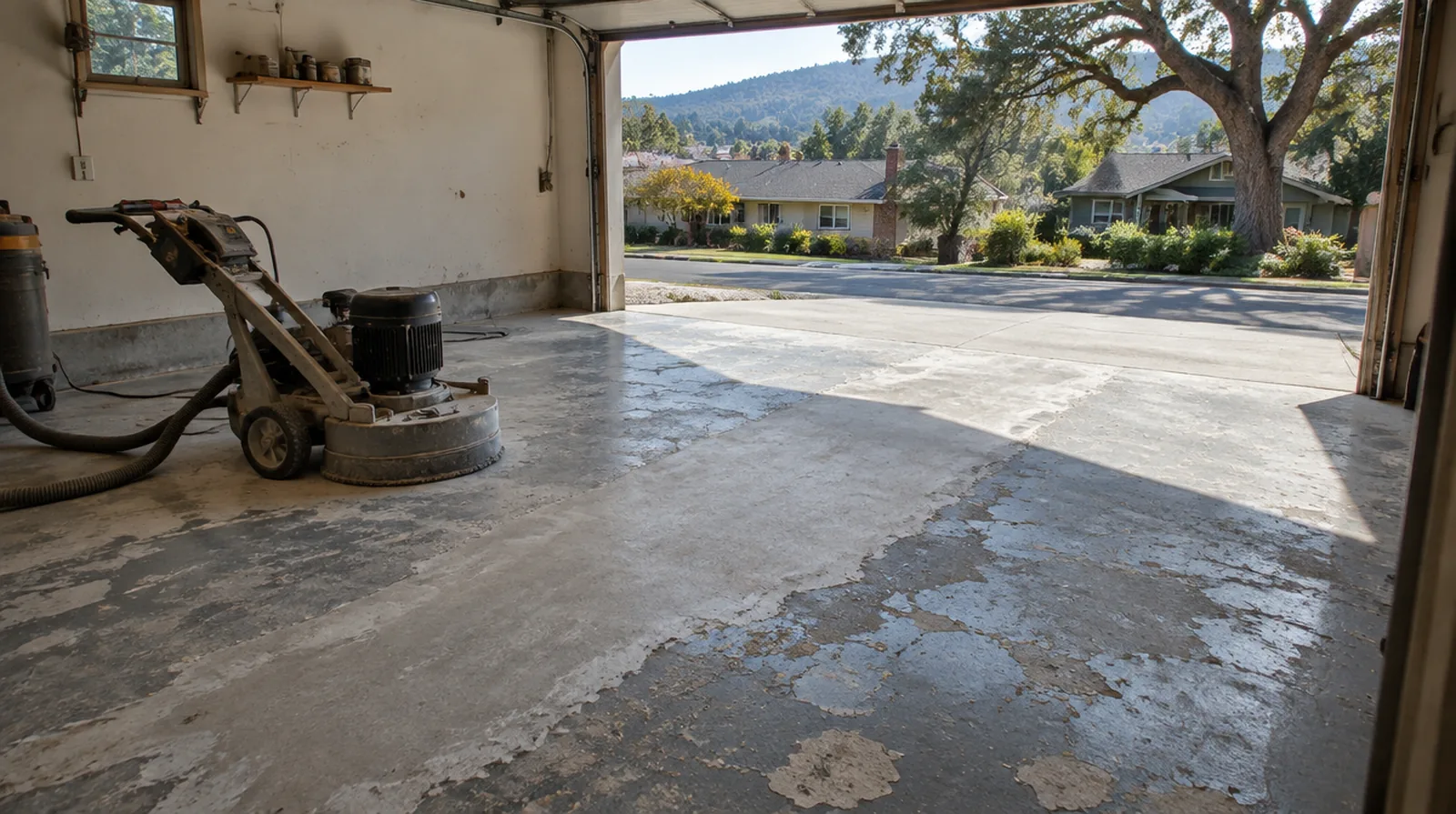
Common issues
Bubbling, peeling, worn areas and stains.
Fix
Test moisture, remove failed coating, apply mitigation primer and recoat.
Why did it bubble?
Moisture vapor from below.
Can it be fixed?
Yes.
Bay fill settling
Settling slabs can crack coatings. We repair the crack and the coating together.
Office and lab repairs
Damaged areas can be repaired after hours so work continues.
Garage paint
We remove peeling paint and install a full system.
Reading the blisters
A blister that weeps liquid when cut open points to vapor drive through the slab, common on the low ground east of El Camino. A dry, hollow blister usually means the coating never bonded. We cut a few open during the visit, show you what we find and price the right fix rather than a guess.
Moisture mitigation explained
When vapor is pushing up through a slab, a special epoxy primer is applied at a thicker film to block it. It costs more, but it is the difference between a floor that bubbles again and one that lasts.
Repairing floors on hills and bay fill
Epoxy floor repair in Redwood City often comes down to moisture and movement. Hillside garages push water through the back wall and up through the slab, causing blisters and peeling. Slabs on bay fill near the Shores can settle, cracking coatings along the way. We also see garage paint flaking and thin kits peeling under tires. For another installer's take on reading those failures, Concord Epoxy Flooring Group explains how they trace peeling to tire paths, cracks or joints before choosing a repair.
Our repair approach
We test bond and moisture, map cracks and blisters and decide with you whether to patch or replace. Moisture problems get a mitigating primer. Moving cracks get flexible fillers. A fresh clear coat helps blend repairs.
Repair questions
Can you repair a coating in a shared condo garage? Yes, with HOA coordination.
Will it bubble again? Not if the moisture is properly addressed.
How we read blisters and cracks
Blisters with water or white powder under them point to moisture from below. Peeling in tire paths points to poor bond or hot tires. Long cracks that run through the coating usually follow cracks in the slab, which on bay fill can keep moving. Each needs a different fix, and we explain which you have before pricing the repair. If most of the floor is still well bonded, a patch and a fresh clear coat is often all it needs.
Timeline
Most repairs take one to two days.
Settlement cracks on bay fill and how we repair them
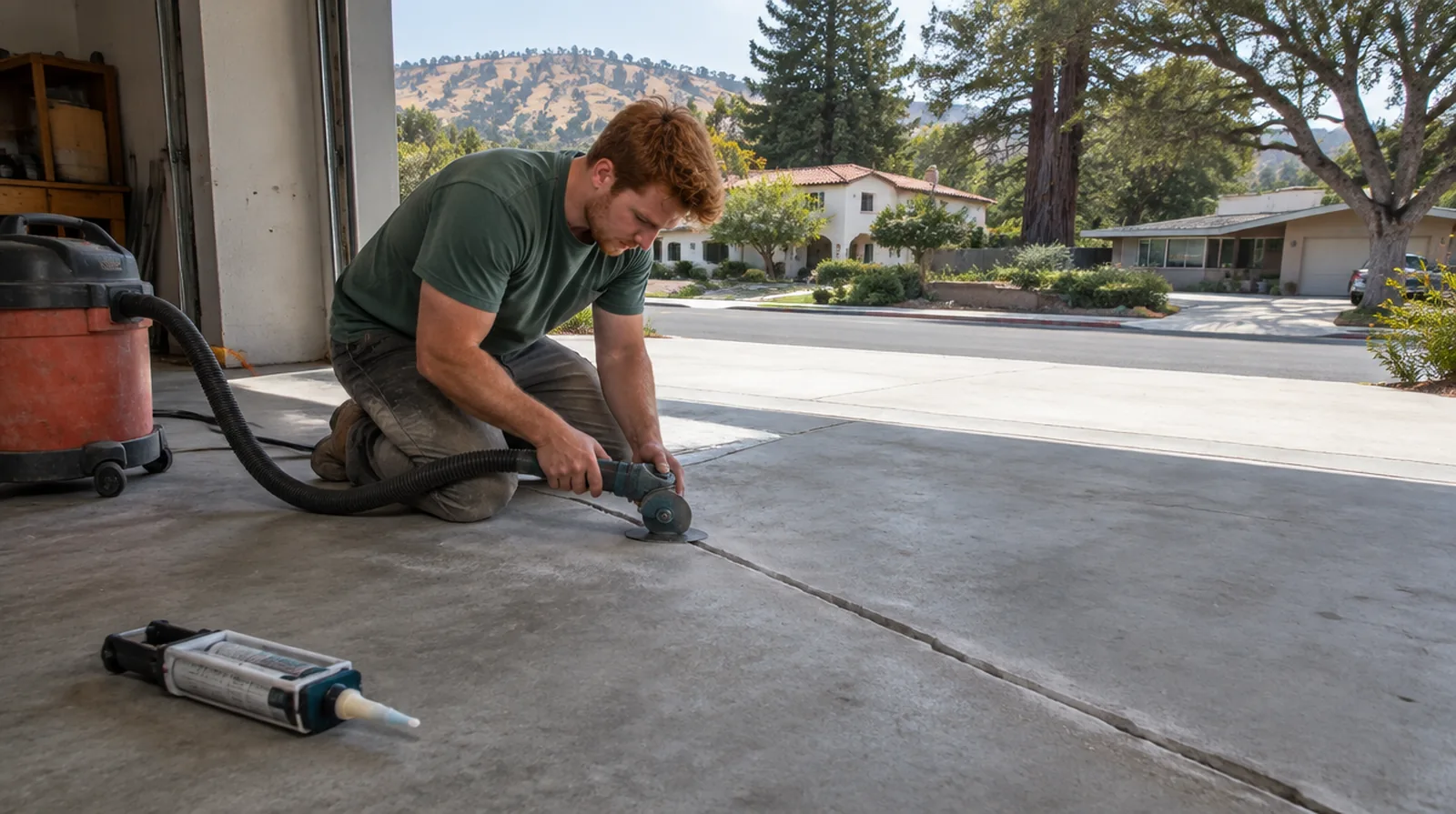
Large parts of Redwood City, especially Redwood Shores, the neighborhoods near the Port and the flats east of 101, were built on filled marshland. Fill can settle slowly over decades, and garage slabs on it often show long diagonal cracks or slight drops at the corners. When a coating is applied over those cracks without proper repair, the crack telegraphs right back through within months.
Our repair starts with figuring out whether a crack is still moving. Width, edge condition and the history you give us all matter. Static cracks are routed open, cleaned and filled with a rigid repair material, then ground flush. Cracks that still shift get a semi-rigid filler that can flex a little. Where one side of a crack has dropped, we grind the high edge before coating so tires and feet do not catch a lip.
Repairing an existing coating
Some floors we see already have a coating that has started to fail along cracks or at the garage door. If most of the floor is well bonded, we cut out and repair the damaged areas, prep the rest and recoat. If the bond is poor across the floor, a full removal is the better long-term choice. We test the coating before recommending either path.
Moisture and peeling
Peeling in a ring pattern or white haze under a coating usually points to moisture coming up through the slab. Repairs in that situation start with a moisture test and a primer suited to the readings.
Repair question
Will the repaired crack be visible? Under a flake floor, rarely. Under a solid or metallic finish, a faint line may remain, though it will be smooth and sealed.
Get a repair estimate
Call (650) 995-9944.