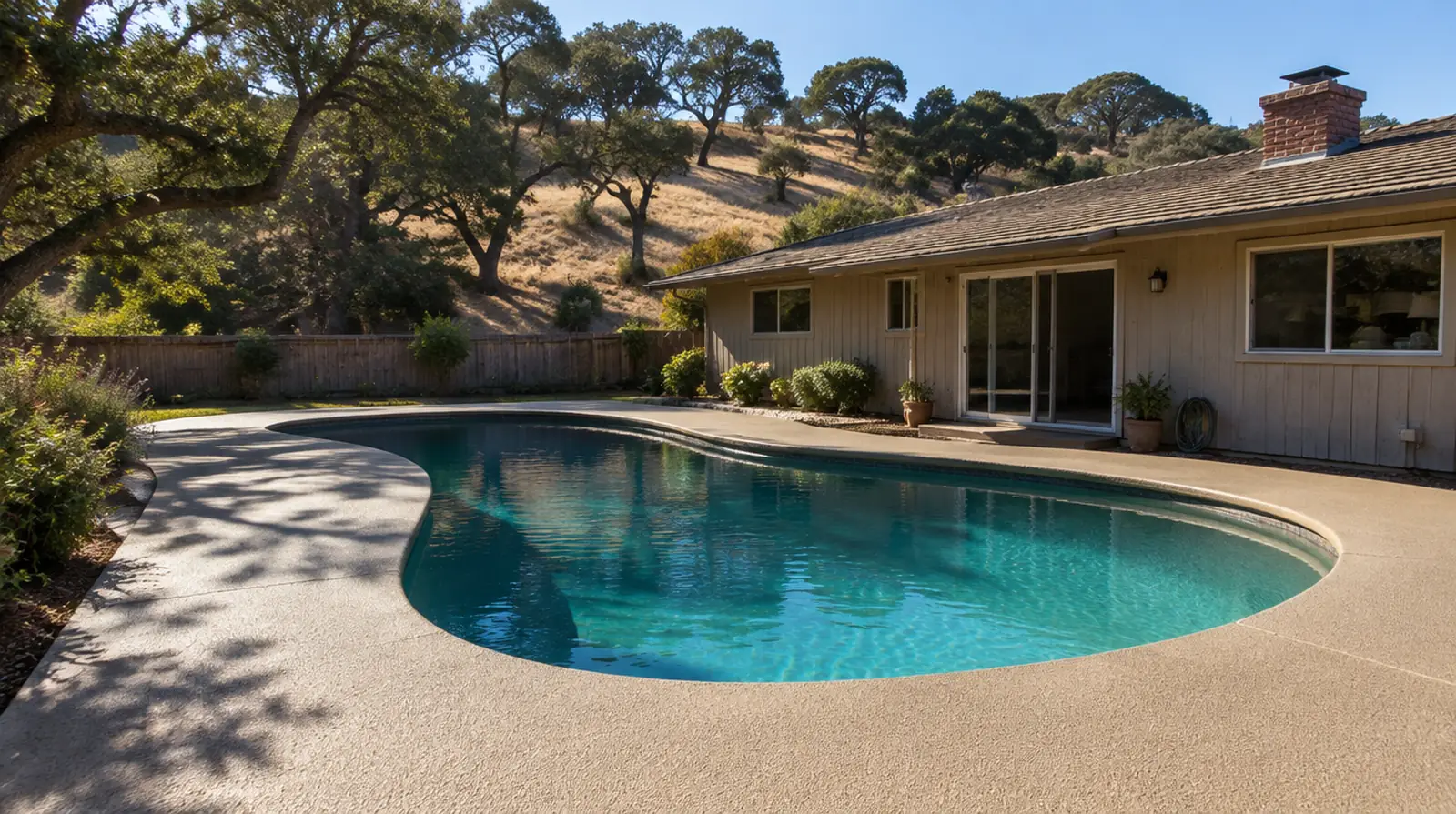
What Redwood City pool decks go through
The city likes to say it has a "climate best by government test," and for a pool owner that mostly holds up. Summers run warm and dry with very little rain from June through September, so a deck sits in steady sun for months. Then the rainy season arrives, usually from November into March, and the same concrete stays damp for weeks. That swing from baked to soaked is what breaks down an old acrylic finish. It chalks, the color fades unevenly, and the texture wears smooth along the paths people walk most, usually from the back door to the steps and the diving end.
Leaves add to it. Coast live oaks, sycamores and liquidambar are common in older yards, and their tannins leave brown shadows on light finishes if they sit through a wet week. A good coating will not stop leaves from falling, but it will rinse clean instead of soaking the stain in.
Hills, flats and the Shores
Where your house sits in Redwood City changes what we look for before we coat anything.
- Emerald Hills and Farm Hill. Larger hillside lots, many with pools added decades ago. Decks here often have runoff coming down the slope, and hillside soil over the serpentine bedrock can creep a little after a wet winter. We look closely at cracks that run toward the slope and at how water leaves the deck.
- The flats. Neighborhoods like Roosevelt, Woodside Plaza and Palm Park have mostly mid-century houses on flatter lots, with pools that are often fifty or sixty years old. These decks usually have several earlier coatings stacked up, and the old layers have to be judged before anything new goes on top.
- Redwood Shores. Built in the 1960s and later on former bay marsh and salt ponds, over soft bay mud. Slow settlement shows up as wide joints, tipped panels and cracks near the house. Many homes here are also in HOAs with rules about exterior colors.
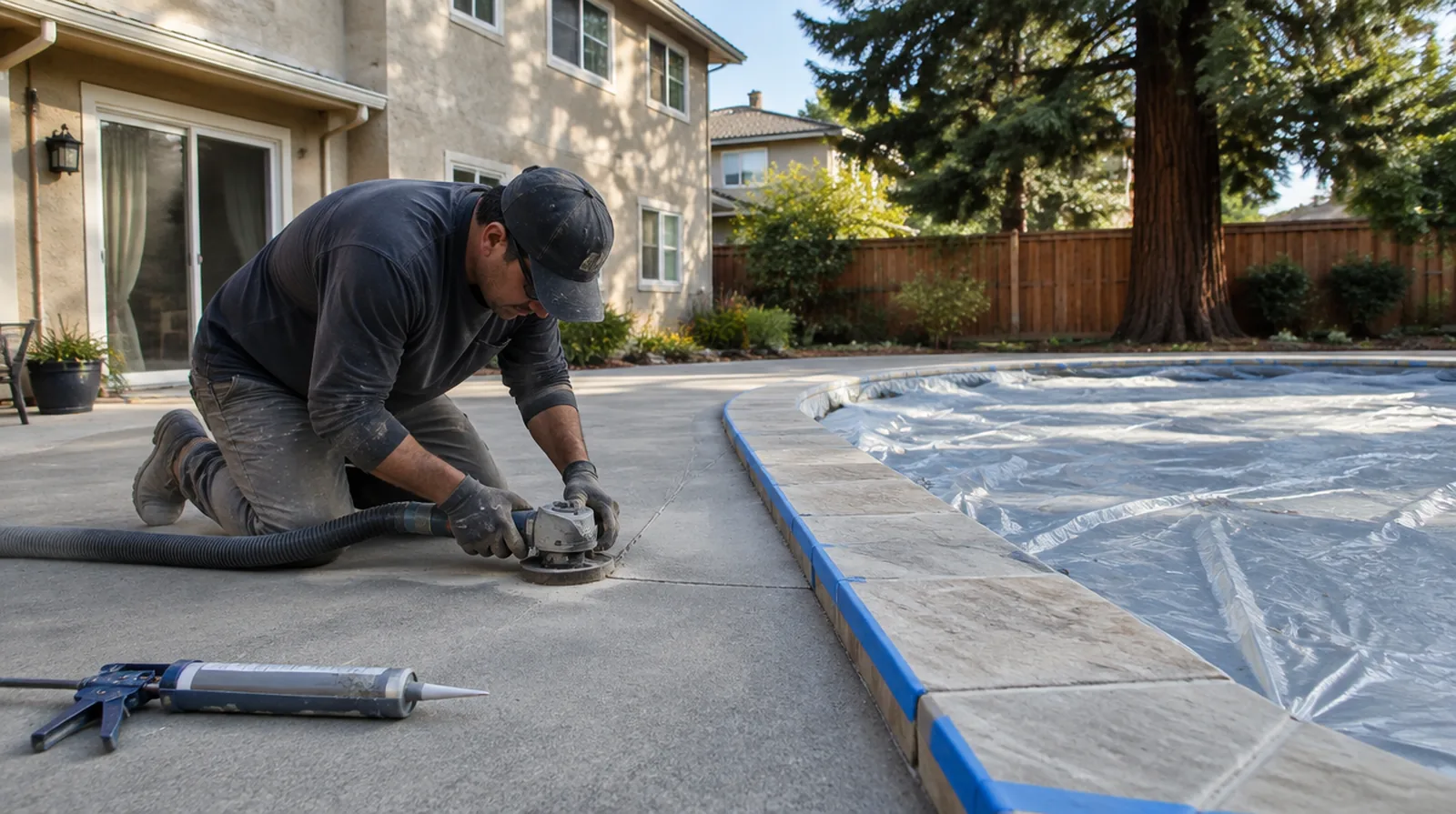
How we coat a pool deck
The coating is the easy part. The prep decides whether it lasts.
- Test the old finish. We tape-test and scrape the existing coating. If it lifts in sheets, it comes off. Coating over a failing layer just glues your new money to something that is already letting go.
- Grind and clean. We grind or pressure wash to open the surface, then vacuum so dust does not end up in the pool. The water stays covered while we work.
- Cut and fill cracks. Cracks get routed out and filled with a flexible patch. On decks that are still moving, such as some in Redwood Shores, we keep control joints open and caulk them instead of bridging them, so the next crack lands where it is supposed to.
- Base coat and texture. A bonding coat goes down, then the texture. Spray knockdown, a fine trowel texture or a broadcast-sand finish all work; we will show you samples.
- Seal. A UV-stable topcoat locks in the color and makes rinsing easy. We mix grit into it so wet bare feet stay planted.
Picking a color and finish
Light colors stay noticeably cooler under bare feet on a July afternoon, so most people here pick sand, buff, light gray or a soft white. Darker grays look sharp next to modern remodels but absorb more heat. Knockdown hides small flaws in old concrete best. A smoother texture looks cleaner on newer decks but shows more. If you are in an HOA, bring us the color list and we will match a sample board to it so you can submit it before work starts.
Inside garage epoxy is not made for a pool deck. It gets slippery when wet and the sun breaks it down. Pool deck systems are built for both problems. If your deck only needs protection and not a new color, our concrete sealing may be enough.
When to schedule
Late spring and early fall are the sweet spots. The concrete has to be dry, and the coatings cure best in mild weather. Most residential decks take two to four days, plus a day or two of cure time before you set furniture back out. If you want the pool ready for Memorial Day, call us in March or April, before the summer rush starts.
Pool deck questions
Can you coat over pavers or flagstone? No. These systems are for concrete. Pavers usually need a joint sand and sealer job instead.
Will the pool need to be drained? No. We cover the water and protect the coping and tile line.
Do you fix the coping too? We reseal the joint between the deck and the coping, which is where water often gets under the deck. Cracked coping stones are a job for your pool contractor.
Get your pool deck ready for summer
Call (650) 995-9944. We will look at the cracks, the drainage and the old finish, then give you a written price.